Signs of financing crisis financing for viable borrows but struggle for weaker companies remains unchanged
 Mumbai, Ta. December 12, 2019, Thursday
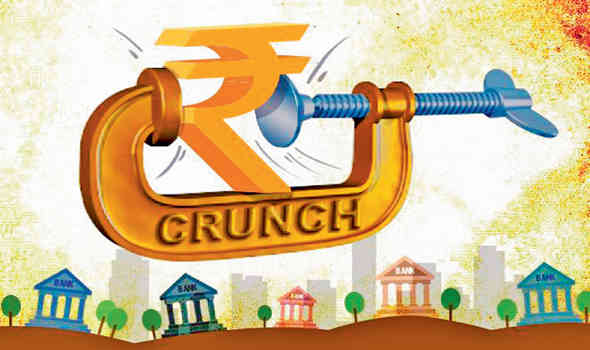
The credit crisis seems to be over for the country's bureaucrats, but poor companies are still in a position to continue the struggle. Policymakers have been fighting to stop the debit markets in the country since last year's IL&FS chapter.
The spread of corporate bonds with the top rating is back again to the level it was in September last year. After 9 September, the credit crunch in the country was rising.
Companies with the top rating have sold $ 5 billion worth of debt instruments this year, while companies with poor ratings have been trading at a four-year low of Rs 5 billion.
There is still a lot of work to be done. Companies with lower ratings will still have to endure the pull of money and the rise in boring costs. The country's economic growth has fallen to a three-year low of 5% in September quarter.
Corporate financial health is down to a seven-year low, the Care Ratings Index says. Many defaults keep investors from surging, ”said one analyst.
Starting last year, the cash flow in the country's NBFCs has not been reduced. The financial needs of the country's small vendors to large property tycoons are being met through NBFCs.
Investors have switched to safe investment due to NBFC defaults. In addition, the incident of Karvi and Diwan housing has raised concerns about the administration. The government has announced several relief measures to boost the country's economy.
Moreover, the Reserve Bank has also announced a decrease of 4 basis points in the repo rate from February this year to the present. While various measures announced this year have not benefited the weaker companies in particular, policymakers will have to wait until next year to meet their financial needs.


Comments
Post a Comment