Global economic recession fuel, Germany followed by Britain, Eurozone and the looming crisis on the whole of Europe
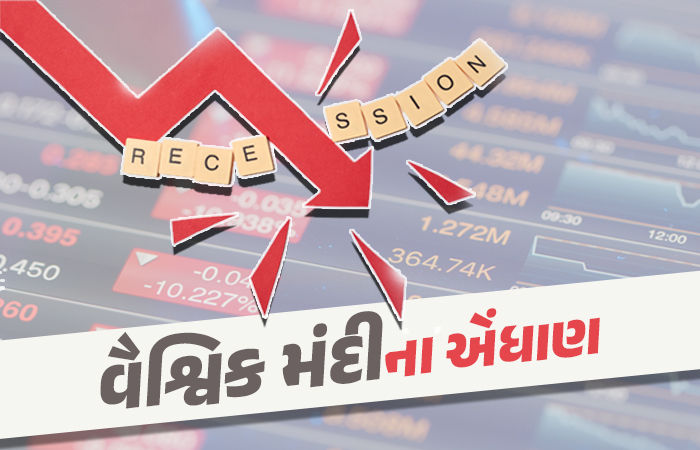 |
image : Envato |
Fears of global economic recession (Global Recession 2023) are going to come true. The prospect of a US recession, the world's largest economy, has eased, but that has not reduced the risk. For Europe, the recession will prove dire. Recent situations are giving a clear indication of that.
Germany became the victim
Germany, Europe's largest economy, is officially in recession. Now there are fears that Europe's second largest economy after Britain may fall into recession. Not only this, the entire Eurozone may also fall into recession. If this happens, this global recession could prove disastrous for the European economy.
What is called economic depression?
In an economic recession, growth slows down, companies close one by one, and people are devastated by unemployment and inflation. According to the official definition, an economy is considered to be in recession if its growth rate remains below zero for two consecutive quarters. When the economic growth rate goes below zero i.e. becomes negative, then the size of the economy is considered to be decreasing. Germany's economy has seen two consecutive quarters of negative growth.
Ban on raising interest rates
As for Britain, Europe's second-largest economy and the world's sixth-largest economy, the pace of layoffs is the fastest since the pandemic. According to a Bloomberg report, companies in Britain are currently shedding their workforce at the fastest pace since the pandemic. The economic crisis has deepened. Following this, the Bank of England decided not to raise interest rates for the first time in almost two years at its policy meeting held this week.
The condition of Britain is very bad
Britain's S&P Global composite PMI fell to 46.8 in September. A month ago this index was at 48.6. This is the biggest fall in Britain's composite PMI since January 2021. January 2021 was the time of lockdown due to the pandemic. Excluding the pandemic, the pace of layoffs in Britain's job market is the fastest since October 2009, according to S&P Global. These figures show that Britain's economy is not in good shape and could be headed for recession in the coming months.
Serious threat bells for the Eurozone
A report has sounded serious threat bells for the Eurozone. According to the report, the Eurozone economy may suffer negative growth this quarter with no signs of a long-term return to positive territory after that. S&P Global's eurozone composite PMI was at a 33-month low of 46.7 in August. That improved to 47.1 degrees in September, but is still below 50. A PMI below 50 indicates a contraction.
Expected drop in September quarter
The Hamburg Commercial Bank said in a recent report that the size of the eurozone economy could shrink by 0.4 percent during the third quarter of 2023, i.e. July-September. In fact, to control inflation, the ECB has raised interest rates by 4.5 percent in the past few months. Expensive interest rates have put brakes on the economy's progress. France's strong services sector, the eurozone's largest economy, continues to shrink. The risk of recession is thus highest in the Eurozone.
Join Gujarat Samachar's WHATSAPP CHANNEL for breaking news, important news and interesting videos . After joining, turn on the Bell Icon specially, so that you will receive important notifications .


Comments
Post a Comment