Important judgment of Supreme Court on marketable title of property acquired at auction
 - Lokabhimukha Guidance : H.S. Patel IAS (Retd.)
- Other restrictions of the Government are not applicable on the property obtained by public auction
Many questions arise regarding the title of property acquired through public auction. Provisions for public auction are also in different perspective in different laws. E.g. The title is naturally clear at the time of public auction of government land or land owned by a municipal corporation. But the properties of banks mortgaged/secured, auctioned as part of recovery of land revenue arrears are attached and auctioned when the loans from different financial institutions and other enforcement agencies are not recovered. Then land/property title issues arise. In particular, in the lending and collection process of banks, apart from the borrower, the guarantor as part of the security and the properties that are mortgaged are related parties, so the scope of asking such questions from the readers is increasing, so the Supreme Court in this matter to get information about this also to the general public. With the judgment given in the year 2014 by So, in the auction of the property taken in Tanch, the recipient gets a clear and marketable title which is clarified.
As a basic principle, transparency is maintained in public auctions and bidding process is done as part of discovery of market price and in which the highest bidder is approved by the competent authority as part of the auction process. Thus, the law regulating the transfer of properties is the Transfer of Property Act-1882. In which through different transactions eg. Property is transferred by sale, gift, mortgage etc. Judgment of Civil Appeal No. 161-162/2014 dated 8-1-2014 of the Named Supreme Court regarding the title of the properties to be auctioned if the loans given by banks and other financial institutions are not recovered on time, Justice, A. K. Patnaik and Jagdishshigh Kehar in Sadashiv Prasad Singh v. Harendra Singh and others holds that a loan of Rs.12.70 lakhs granted by Allahabad Bank to M/s Amar Timber Works on 11-9-1989 to a partnership firm, which was not recovered within the time limit, As per the legal provision D.R.T. (Debt Recovery Tribunal) initiated recovery proceedings. In the meantime, Jagmohan Singh, one of the partners of Amber Timber Works, died during the recovery proceedings and the plot taken in Tanch in Patna was owned by him and Jagmohan Singh's brother Harendra Singh filed an objection petition before the recovery officer alleging that the property taken in Tanch was not owned by the debtors. , but was purchased by him from his brother Jagmohan Singh, but the same was false, the registered document was not recorded i.e. there was no legal backing and therefore he was not serious about his claim / right during the subsequent proceedings before the Recovery Officer. There were only two main parties in this case. Auction proceedings were conducted by the Recovery Officer of the Debt Recovery Tribunal (DRT) on behalf of Allahabad Bank and accordingly the sale was declared on 28-8-2008 in favor of the highest bidder Shri Sadashiv Prasad Singh and possession of the land in question was awarded to the auction purchaser. .Submitted on 11-3-2009.
The decision of the Recovery Officer (DRT) in this case was challenged in the Patna High Court and Sadashiv Prasad, the auctioneer, was joined by the High Court as a party. The appellant submitted to the High Court that Amar Timber Works was a partnership firm and the property of one of the partners could not be auctioned. The Hon'ble High Court after examining all the aspects has observed that the sale/auction proceedings have reached a stage which has not been challenged in due course and the party has not presented any satisfactory explanation thereof and which the Court has observed that the conduct of the petitioner has precluded from passing any order in his favor as well as restrained. has been done and therefore the writ petition is quashed as there is no merit in the writ petition of the High Court. Aggrieved by this order, the party appealed the LPA Letters Patent. In which the party admitted to have taken the loan, but considering the discrepancy between the amount stated in the auction and the amount recoverable, after checking the money recovery act and equity and other matters, the person who bought in the auction was ordered to pay Rs. 17 lakhs was ordered to be returned and paid in installments to the creditors in the LPA and after the full amount was paid to the auction buyer the recovery officer was ordered to return the possession, thus setting aside the order of the Single Judge in the LPA.
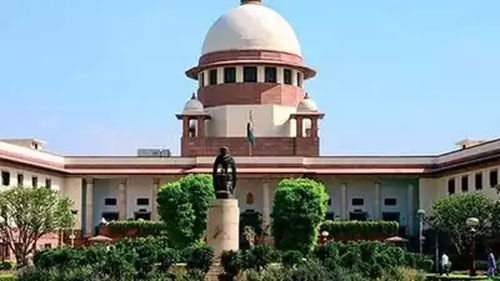
Both the judgments of the Patna High Court viz. the LPA were challenged in the Supreme Court by the auctioneer Sadashiv Prasad Singh and the Supreme Court gave the impugned judgment, setting aside the judgment of the Patna High Court in the LPA and noting that the propositions between the bank and the lessee in the LPA And matters based on Claims and Counterclaims were presented. When the auction purchaser is a bonafide purchaser for value pursuant to a duly declared auction, the principle of equity was not decidable by the High Court. Thus the right of the appellant to hold the property by auction was upheld. The details of this case were thus made public so that the right of the person holding the public auction is acquired by the marketable title without any encumbrance.


Comments
Post a Comment