Option to invest small amounts through funds now in Nifty 50 ETFs
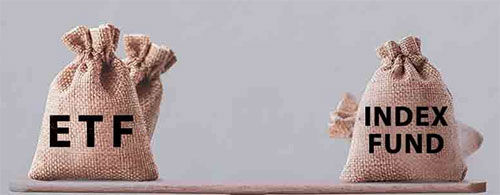 Many investors who are new to equities often ask how to determine the right investment path. The main goal of investing in equities is usually to earn inflation-beating returns over the long term. Achieving these goals requires equity exposure, be it through mutual funds, direct stocks or a combination of these two options. But if you are new to equities and want to start straight with stocks, deciding on the right company to invest in is not easy - you need to understand the company's financials, business prospects, valuations, industry dynamics, market conditions, etc. Nifty 50 ETF (Exchange Traded Fund) is the best investment vehicle under these circumstances. An ETF, which tracks a specific index, is traded on exchanges like stocks, offered by mutual fund houses. You can buy and sell units of ETFs from exchanges during market hours.
The Nifty 50 index includes the largest Indian companies in terms of market capitalization. Therefore, an investment in Nifty 50 ETF provides an investor with excellent diversification across stocks and sectors as it tracks the index. One can start investing in this even with a small amount. ICICI Prudential Nifty 50 ETF on NSE at Rs. 185 is trading. Thus you get Rs. One can invest as little as 500-1000 and buy units of Nifty 50 ETF from the exchange. You can also make systematic investments every month.
A diversified portfolio reduces risk for the investor, which is not the case with investing in a single stock, where market volatility can affect stock prices more adversely than a basket of companies. Also, returns from investments in Nifty 50 ETFs will replicate the movement of the underlying index. The only requirement is that you need a demat account to invest in ETFs. People without demat account can consider investing in Nifty 50 index fund. Investing in Nifty 50 ETF is relatively cheap. Since, the ETF passively tracks the Nifty 50 index and has limited or no churn in the index components, the costs are low. The expense ratio, or in other words what the fund charges, is only 2-5 basis points (0.02-0.05%). A basis point is one hundredth of a percentage point.


Comments
Post a Comment