Rising interest rates and liquidity crunch – another challenge facing MSMEs
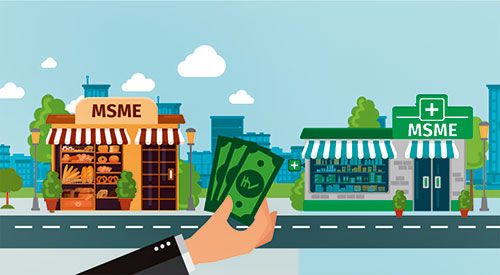 - Money crunch is the biggest hindrance against the development of small businesses in the country
Keeping in view the high inflation, the Reserve Bank of India has started the exercise of increasing the interest rate. The interest rate has been increased by 190 basis points since May of the current year. It is currently seen that the Reserve Bank will continue to increase the repo rate to curb inflationary pressures. On the one hand, the increase in interest rates, while on the other hand, liquidity stress is being seen in the financial system, due to which banks are also forced to raise money by issuing commercial papers. In the April to October period of the current financial year, the amount of money raised through Certificate of Deposits has increased by 22 percent year-on-year.
Banks have raised Rs 3.51 trillion through Certificate of Deposits in the period from April to October, which was Rs 2.87 trillion in this period last year. Liquidity crunch in the banking sector will not often affect the industries especially the micro, small and medium enterprises (MSMEs). The contribution of MSMEs to employment and overall economic development in the country remains significant. In 2022, the share of MSMEs in the country's GDP was 29 percent while according to the annual report of the Ministry of Finance of MSMEs for the year 2022, there were a total of 6.33 crore MSMEs operating in the country in which 11.10 crore jobs were involved.
In view of liquidity stress in banks, MSMEs have turned to look at other sources of finance. Accessing finance through other channels than banks becomes expensive for MSMEs. MSMEs are the second largest source of employment after agriculture, and despite their large contribution to the country's economy, only thirty-eight to forty percent of MSMEs can access or are successful in accessing credit through the organized financial system. The remaining 60 to 62 percent obtain or are forced to obtain funds from the informal financial system.
It is true that the government has released various credit schemes for MSME considering that they are making an important contribution to the country's economy, but looking at the economic recovery that has started in the country and the increase in the interest rate, it would not be wrong to say that the government schemes will not prove to be sufficient. As cash flows from customers remain uncertain, the banking sector is not particularly keen to provide finance to MSMEs on a liberal basis unless the government provides assurance of repayments. Availability of funds to undertake expansion programs continues to be a challenge for small scale industrial units due to constraints in accessing finance from banks. The non-banking financial companies (NBFCs) currently providing credit to the MSME sector ultimately have to raise funds from the capital market or from banks. In the current scenario, it has become expensive for them to access finance in this way, due to which it is not possible for them to provide credit to MSMEs at cheap rates. Due to lack of expansion, MSMEs cannot increase their production capacity and are forced to stay in the same position for years.
Several efforts have been made over the last decade to ensure access to credit to MSMEs, but much remains to be done to boost credit to the sector. Given the important contribution of MSMEs to the Indian economy, one cannot turn a blind eye to the problems in this sector. If the government is really serious about providing credit to those MSMEs who cannot get finance easily, it is undertaking an exercise to identify such MSMEs and provide support to them in getting credit. In the wake of Covid-19 and now the post-Russia-Ukraine war, it has become imperative to create a modern-day easy credit system for MSMEs if the economic growth rate is to be accelerated and the country is to move towards a five trillion dollar economy. MSMEs need to increase the flow of funds.
Post-Kora, high interest rates have made the situation unfavorable for MSMEs. Apart from their important role in the economy, the importance of MSMEs cannot be underestimated from a social point of view. It is necessary to give impetus to this sector. Besides generating employment, MSMEs also provide employment to millions of youth in the country who are deprived of adequate education or training. The central government announced to provide employment to ten lakh people and has also started the work towards it recently. It has been announced to complete this target by the end of December 2023. If this target is to be met, there is a need in today's environment of rising interest rates to protect the MSME sector of the country from financial congestion.


Comments
Post a Comment