A sudden rise in heat will reduce agricultural production targets
- Commodity Current - Jayavadan Gandhi
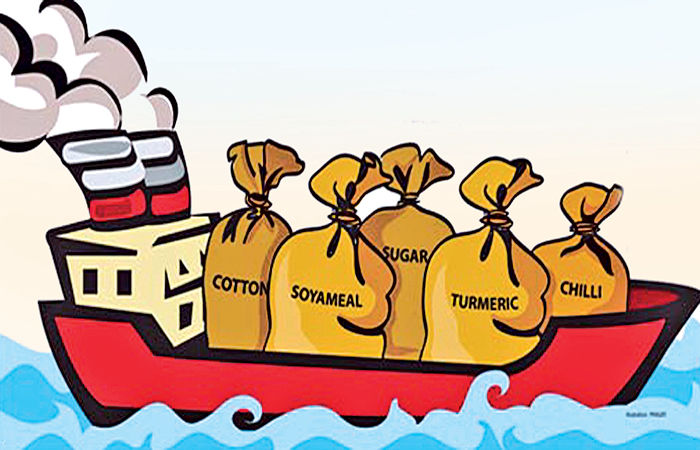
The demand of Indian agricultural products in the global market is continuously increasing. Exports of agri commodities up to December of the current financial year have registered a significant increase of almost 20 percent. The Indian government's mission to become self-sufficient in food items has now come to fruition, given the surplus that is being exported despite export restrictions on certain items such as wheat. Commodities worth about 1.56 lakh crore rupees have been exported during the current year. Among the agricultural products, the largest export of grain has been around 83 crore rupees. Due to the ban on wheat exports, rice exports have increased to record highs. The government has emphasized in the budget to re-invigorate the drive to become self-reliant in the agricultural sector. In which several national programs are being implemented to increase the production of limited yield crops such as pulses and pulses. Due to which the results are getting in the current Ravi season. About 3 to 4 percent more has been planted this year than last year in which rice has been planted the most. Especially in Telangana and West Bengal, rice cultivation has increased. The government has stepped up efforts to increase cultivation of low-water-demanding telebia, pulses and nutritious cereal crops. Seven to eight percent of plantations are recorded in telebia with more focus on increasing self-sufficiency in edible oils. In which there has been a surge in the cultivation of telebia in states like Rajasthan, Madhya Pradesh, Chhattisgarh.
Nowadays, when the rabi crop season is in its last phase, there is a lot of concern among the farmers due to the negative effects on the production of various crops including grains due to the sudden increase in temperature. Last year too, scorching heat from March reduced wheat production. This time too, the confusion has increased since the current month of February, with the temperature rising from 28 to 30 degrees. A gap in the expected production target may occur due to the possibility of reduced soil moisture due to increase in temperature and weakening of the crop grain. However, the new crop of wheat has started to flow in the markets of Madhya Pradesh and Gujarat. The market is higher than last year as the new crop is currently in good condition.
For the season starting from April, the government has announced the support price of wheat at Rs 2,125 per quintal, while the current prices of new wheat in the market are in the range of Rs 2,500 to 3,000. However, the market is likely to decelerate as in-season wheat commodity receipts increase. Currently, to keep wheat prices under control, the government has started selling buffer stocks of wheat in the open market, which has reduced by Rs 100 to 200 per quintal.
Meanwhile, the market is in a wait-and-watch mode due to the prospect of rising heat affecting spice crops, adding pressure on spice prices in the futures market. Turmeric and Coriander markets are at a four-month low. Last month, the prices of turmeric fell by 11 percent and remained around seven thousand.


Comments
Post a Comment