Bogus billing is a major problem plaguing the GST Council
- Antenna - Vivek Mehta
- As a result of GST office policies on metal, textile and restaurant and construction industries, bogus billing is on the rise.
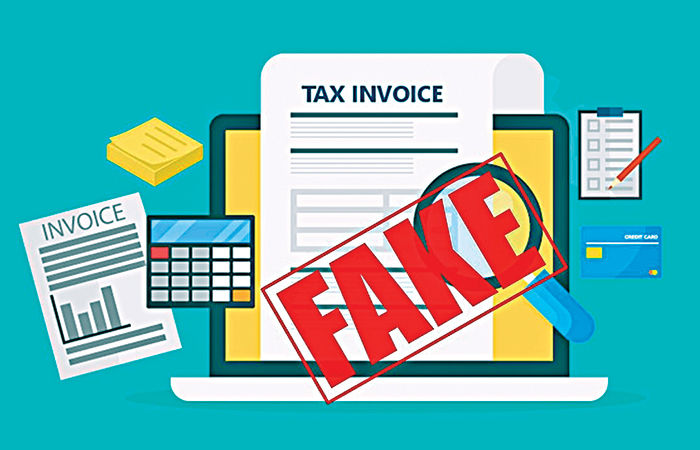
The Goods and Services Tax Council is meeting on July 11. Its agenda is to control people from bogus billing and obtaining registration without eligibility. But can control them? Suspicion is strong. There is little chance of it being controlled. Here are the reasons. First of all, to stop bogus billing, the government needs to restructure the tax rates of all the products which have high GST on raw materials and low GST on marketable goods manufactured from them. The situation where the input tax credit of the traders remains forever is known as inverted duty structure in the technical parlance of GST. It has to pay more GST on raw materials. Since the GST rate on manufactured goods is low, traders are left with input tax credit. A trader who avails input tax credit only carries on the business of selling bills to another trader.
Thus the bogus billing starts only because of the faulty system of the GST Council. Traders create bogus invoices and pass them to other traders without selling the goods just to get back the trapped amount of input tax credit. Let's talk by giving an example. Let's talk about the cooker used in the cooking house. 12% GST is applicable on pressure cookers. But 18 percent GST is applicable on every raw material used to make the cooker. This is the case with most of the products in the metal industry. Secondly, GST office officials are taking the wrong way to block input tax credit. As a result bogus billing is also on the rise. Builders and restaurant owners are not given input tax credit. So they shop without a bill. The supplier gives them without creating a bill. Thus bogus billing will occur when input tax credit is attempted to be withheld.
Thirdly, in income tax, cash purchase or sale of Rs. The limit of 10,000 should be removed. Under Section 269 (ST) of Income Tax Act Rs. If more than 10,000 is sold, 100% penalty is charged. In it Rs. 10,000 worth of cash purchases are disallowed. So some people prefer to shop without taking the bill. In this case the person who has supplied without a bill gives the bill to the other person without supplying the goods. In the textile industry too, there is a 5 percent GST on ready-made garments (worth less than Rs. 1,000). But 18% GST is levied on yarn and other raw material for it.
As a result many have started selling bills by printing bill books. It has 2A or 3B filling system. Under this system, one gets the bill only after filing returns for three months. A very big deal can be done in this period. After the capture of the Billia kings, they try to extort money from him by abducting one or two. Many people leave them believing that they will not get money. Fourthly, despite having Aadhaar card, PAN card, they are being cheated in giving registration to traders. Instead of tallying his record with income tax returns and verifying its authenticity, the officials want SIM card bills from him. Avoiding registration by raising questions as to why you are doing business from home instead of office. It is a delusion of GST officials that stopping registration will stop bogus billing. The GST Council system also has a red flag system. In the account of a businessman with an income of two lakhs, suddenly Rs. Even if a turnover of 50 crores starts happening, they are not caught.


Comments
Post a Comment